

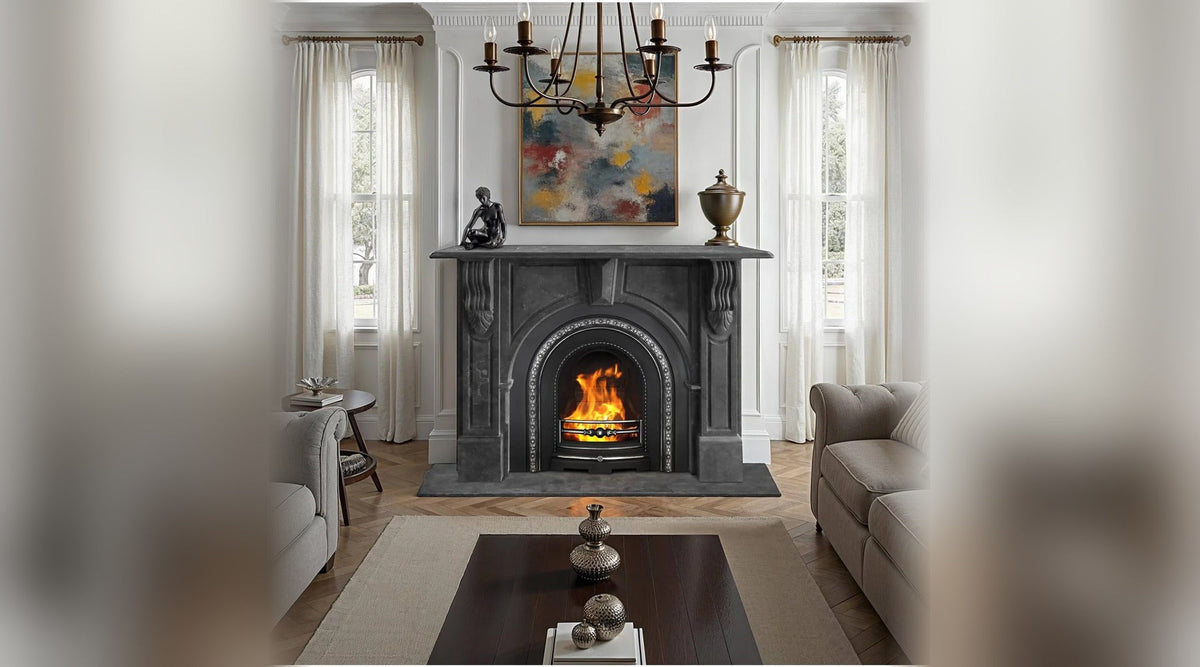
The 2 main difference between a wood fireplace and a gas fireplace is how they produce heat.
- Wood fireplaces burn firewood to create radiant heat and a traditional flame.
- Gas fireplaces burn natural gas or LPG to produce controlled flames and steady heat.
Gas fireplaces offer convenience and temperature control, while wood fireplaces typically deliver stronger heat output for larger spaces.
This guide compares wood vs gas fireplaces in Australia, including heat output, efficiency, installation, and which homes they suit best.
Wood vs Gas Fireplace: Which Is Better?
A wood fireplace is better for large homes and strong heat output.

A gas fireplace is better for convenience and controlled heating.
Which is better for you depends on your needs and the space the fireplace will sit in.

Wood vs Gas Fireplace: Quick Comparison
Wood burning fireplaces are best for:
- Large homes
- Rural properties
- Strong heat output
- Traditional fireplace ambience
Gas fireplaces are best for:
- Modern homes
- Urban properties with gas connections
- Homeowners wanting convenience
- Low-maintenance heating
Wood vs Gas Fireplace Comparison
Choosing between a wood heater vs gas fireplace often depends on home size, heating needs, and lifestyle.
|
Feature |
Wood Fireplace |
Gas Fireplace |
|
Heat Output |
8-20+ kW |
4-11 kW |
|
Efficiency |
60-80% |
60-90% |
|
Fuel |
Firewood |
Natural gas or LPG |
|
Ignition |
Manual |
Remote or wall switch |
|
Maintenance |
Regular ash cleaning |
Minimal cleaning |
|
Installation |
Chimney or flue required |
Direct vent or flue |
Wood vs Gas Fireplace: Pros and Cons
| Feature | Wood Fireplace | Gas Fireplace |
|---|---|---|
| High Heat Output | ✔ Excellent for large spaces (8–20+ kW) | ➖ Moderate heat (4-11 kW) |
| Efficiency | ✔ 60-80% | ✔ 60-90% |
| Convenience | ❌ Manual lighting and refuelling | ✔ Instant ignition and easy controls |
| Maintenance | ❌ Requires ash cleaning and wood storage | ✔ Very low maintenance |
| Installation | ❌ Requires chimney or flue | ✔ Flexible installation options |
| Fuel Type | Firewood | Natural Gas or LPG |
| Ambience | ✔ Natural flames and crackling fire | ➖ Realistic but less natural |
| Best For | Large homes, rural areas | Modern homes, urban properties |
What Is a Wood Fireplace?
A wood-burning fireplace burns firewood to generate heat through combustion. Most modern models in Australia are slow combustion wood heaters, designed to improve efficiency and burn time.
They are especially popular in traditional homes and regional areas, where stronger heating is often required.
Typical Wood Fireplace Specifications
- Heat output: 8-20+ kW
- Burn time: 8-12 hours with slow combustion
- Fuel: seasoned hardwood logs
- Ventilation: chimney or flue required
- Wood fireplaces produce radiant heat, which warms people and objects in the room rather than just the air.

3 Benefits of Wood Fireplaces
-
Strong heat output
Wood heaters can heat large living areas or open-plan homes. -
Lower fuel costs in some regions
Firewood can be affordable in rural areas. -
Traditional atmosphere
Many homeowners prefer the natural flames and crackling sound of a wood fire.
Limitations of Wood Fireplaces
- Requires firewood storage
- Regular ash cleaning
- Manual lighting and refuelling
- Requires a chimney or flue
Wood fireplaces require more hands-on use compared with gas heating.
Wood fireplaces are often preferred for large living areas because they produce strong radiant heat. Our guide to the Best Wood Fireplaces highlights some of the top options for Australian homes.
What Is a Gas Fireplace?
A gas fireplace burns natural gas or LPG to create flames and heat. These fireplaces are common in modern Australian homes and renovations.
Many models use sealed combustion systems, which improve efficiency and safety.
3 common gas fireplace include:
- Inbuilt gas fireplaces
- Linear gas fireplaces
- Double-sided fireplaces
Gas fireplaces are popular because they provide consistent heat with minimal maintenance.
Typical Gas Fireplace Specifications
- Heat output: 4-11 kW
- Efficiency: 60-90%
- Fuel: natural gas or LPG
- Ignition: electronic ignition or remote control
- Venting: direct vent or flue system
Gas fireplaces deliver steady heat and precise temperature control, making them ideal for zone heating in living spaces.

4 Benefits of Gas Fireplaces
-
Instant heat
Ignite instantly with a switch or remote. -
Temperature control
Many models allow adjustable flame height and heat. -
Low maintenance
No ash, soot, or firewood storage. -
Flexible installation
Direct-vent systems make installation easier in modern homes.
Limitations of Gas Fireplaces
- Requires a gas connection
- Flames may appear less natural than wood
- Usually designed for zone heating rather than whole-home heating
Heat Output and Efficiency Explained
When comparing gas vs wood heating, two technical factors matter most.
Heat Output (kW)
Heat output shows how much heat the fireplace produces.
Typical ranges:
- Gas fireplaces: 4–11 kW
- Wood fireplaces: 8–20+ kW
Higher heat output is useful for:
- Large open-plan homes
- High ceilings
- Colder climates
Efficiency
Efficiency measures how much fuel converts into usable heat.
Typical efficiency ratings:
- Gas fireplaces: 60-90%
- Modern wood heaters: 60-80%
Gas fireplaces maintain consistent efficiency because combustion is controlled automatically.
Radiant Heat vs Convection Heat
Wood fireplaces and gas fireplaces heat a room in different ways.
Wood fireplaces produce radiant heat, which warms people, furniture, and surfaces directly. This type of heat can feel stronger in large rooms or open spaces.
Gas fireplaces produce a mix of radiant and convection heat, which warms the air and circulates heat around the room. This helps maintain a more even temperature.
Both systems can heat a living space effectively, but radiant heat from wood fires is often preferred in larger homes or colder climates.

Which Fireplace Is Best for Different Homes?
Best for Large or Rural Homes
Wood fireplaces are often best for:
- Large homes
- Rural properties
- Homes with high ceilings
- Areas with access to firewood
A slow combustion wood heater can produce powerful radiant heat that warms large spaces.
Best for Modern Homes
Gas fireplaces are ideal for:
- Urban homes
- New builds
- Apartments and townhouses
- Open-plan living areas
They provide clean heating with simple controls.
Best for Renovations
Gas fireplaces are often easier to install in renovations because:
- Some models do not require a chimney
- Flue systems are smaller
- Installation can be more flexible
Best Fireplace for Different House Sizes
The size of your home can help determine which fireplace works best.
What is the best fireplaces for small homes or apartments?
Gas fireplaces are often the best option because they provide controlled heat without needing wood storage.
What is the best fireplace for medium-sized homes?
Both gas fireplaces and wood heaters can work well depending on the layout and insulation.
What is the best fireplace large homes or open-plan houses?
Wood fireplaces and slow combustion wood heaters are often preferred because they are capable of warming larger spaces.
Explore our guide to the Best Gas Fireplaces in Australia to see some of the most popular models.

Gas vs Wood Heating Cost in Australia
The cost of heating with wood or gas depends on fuel prices and how often the fireplace is used. A common question during pre purchase is "How much does a wood or gas heater cost to run?"
Typical cost estimates in Australia include:
- Gas fireplaces: around $0.50–$1.60 per hour depending on gas prices and fireplace size
- Wood heaters: costs depend on firewood prices and usage
In areas where firewood is affordable, wood heaters can sometimes be cheaper to run. Gas fireplaces offer more predictable running costs and greater convenience.
The cost of installing a fireplace varies depending on the type. See our detailed Fireplace Cost Guide for a full breakdown.
Fireplace Popularity in Australia
Both wood and gas fireplaces remain popular in Australia.
Industry estimates suggest:
- Wood fireplaces and wood heaters: around 50-60% of sales
- Gas fireplaces: around 30-40% of sales
- Electric fireplaces: a smaller but growing share
Wood heating remains common in regional areas, while gas fireplaces are widely used in modern urban homes.
Are Wood Heaters Being Phased Out in Australia?
Wood heaters are not currently banned in Australia, but regulations are becoming stricter in some areas to reduce smoke emissions.
Modern slow combustion wood heaters must meet Australian emission standards and are designed to burn wood more efficiently.
Wood vs Gas Fireplace: Final Verdict
Choose a wood fireplace if you want:
- Strong heat output
- A traditional fireplace experience
- Heating for large homes
- Lower fuel costs in some areas
Choose a gas fireplace if you want:
- Instant heat
- Consistent temperature control
- Minimal maintenance
- Easier installation in modern homes
Both options work well in Australian homes. The best choice depends on your home layout, heating needs, and lifestyle.

|
 |
 |
 |
Frequently Asked Questions
1. How do you convert a wood fireplace into a gas fireplace?
A wood fireplace can be converted by installing a gas fireplace insert or gas log set and connecting it to a natural gas or LPG line. A licensed installer should complete the conversion.
2. Can a gas fireplace be converted to a wood-burning fireplace?
Usually not. Gas fireplaces are not designed for wood burning and typically lack the chimney and heat-resistant structure required.
3. Can you burn wood in a gas fireplace?
No. Gas fireplaces are designed only for gas fuel, and burning wood can damage the unit and create safety risks.
4. Is a wood fireplace better than a gas fireplace?
Wood fireplaces provide stronger radiant heat and a traditional fire experience. Gas fireplaces offer convenience and easier operation.
5. Do gas fireplaces heat as well as wood fireplaces?
Gas fireplaces produce 4-11 kW of heat, which suits most living areas. Wood fireplaces can produce higher heat output for larger spaces.
6. Are gas fireplaces more efficient than wood fireplaces?
Gas fireplaces can reach 60-90% efficiency, while modern wood heaters typically operate between 60-80% efficiency.
7. Which fireplace is cheaper to run in Australia?
Wood fireplaces may be cheaper where firewood is affordable, while gas fireplaces have predictable running costs based on gas prices.
8. Can a gas fireplace be installed without a chimney?
Yes. Many modern gas fireplaces use direct vent systems, so they do not require a traditional chimney.
9. Do wood fireplaces produce more heat than gas fireplaces?
Wood fireplaces often produce higher maximum heat output, making them suitable for larger homes.
10. Which fireplace adds more value to a home?
Both can add value. Gas fireplaces are popular in modern homes, while wood fireplaces suit traditional or rural properties.


