

Firepits in Australia typically range from 60 cm to 120 cm in diameter, with small bowls (60-80 cm) suiting 2 to 4 people, medium bowls (90-100 cm) suiting 4 to 6 people, and large formats (100 cm+) suited to bigger entertaining areas.
Getting the right size for your outdoor space matters for both comfort and safety, and most Australian fire authorities require a minimum 3 metre clearance from all combustible materials, so measuring your space before you buy is essential.
Whether you are looking at a firepit for an exterior entertaining area, a portable firepit you can move around the garden, or a fixed bowl for a permanent backyard setup, the guide below covers standard dimensions, materials, and safety requirements to help you choose the right fit.
What Types of Firepits Are Available in 2026?
Firepits come in 4 common types based on design and use:
- Bowl fire pits (open, low-profile round or square bowls, with or without legs)
- Cast iron fire pits (heavier, highly durable, often with decorative detailing and included screens or grills)
- Corten steel fire pits (weathering steel, develops a natural rust patina, popular for contemporary and industrial exterior styling)
- Chimineas (vertical, front-loading units with a neck and chimney; enclosed burn chamber)
There are 3 common firepit shapes:
- Round (the most popular; suits casual and formal outdoor areas)
- Rectangular/oblong (suits long outdoor dining tables and entertaining zones)
- Vertical/chiminea (front-loading with enclosed firebox; better ember containment)
Below is a guide on the most common firepit sizes, dimensions, shapes, and materials.

Small Fire Pit Sizes and Dimensions
Small firepits are well suited to compact courtyards, apartment balconies (where permitted), narrow alfresco areas, and households who are after an intimate fire setting for two to four people. For Australian homes with limited outdoor space, or for use as a portable firepit that you can store away between uses, a smaller bowl in the 60 cm to 80 cm range is a practical starting point.
They are also easier to move, which makes them a good option for renters or for beach house entertaining up the coast.
- Diameter: 60 cm to 80 cm (round bowls)
- Height (with legs): Typically 25 cm to 45 cm
- Weight: Approximately 15 kg to 35 kg depending on material and wall thickness
- Seating capacity: Comfortable for 2 to 4 people
- Minimum space needed: Allow at least 3 m clearance from all combustible materials in all directions (see safety section below)
The Atlas 78cm Cast Iron Fire Pit from Schots sits comfortably in this category, at 78 cm wide x 78 cm deep x 25 cm high and 33.5 kg. It includes a safety screen and suits a smaller garden or courtyard entertaining setup.

Medium Fire Pit Sizes and Dimensions
Medium firepits hit the sweet spot for most Australian households. They work well in a standard suburban backyard, on a large alfresco or decked entertaining area, and for families or groups of four to six people gathered around.
A 90 cm to 100 cm bowl is the most commonly sold size in Australia across retailers and suits a wide range of settings from a relaxed coastal backyard in Queensland to a cooler-climate garden in Victoria or the ACT where longer evening fires are the norm.
- Diameter: 90 cm to 100 cm (round bowls)
- Height (bowl only, no legs): Typically 20 cm to 25 cm
- Height (with legs or full unit): Typically 40 cm to 50 cm overall
- Weight: Approximately 33 kg to 55 kg for cast iron; lighter for thinner steel
- Seating capacity: 4 to 6 people comfortably
- Minimum space needed: 3 m clearance from structures and combustible materials on all sides
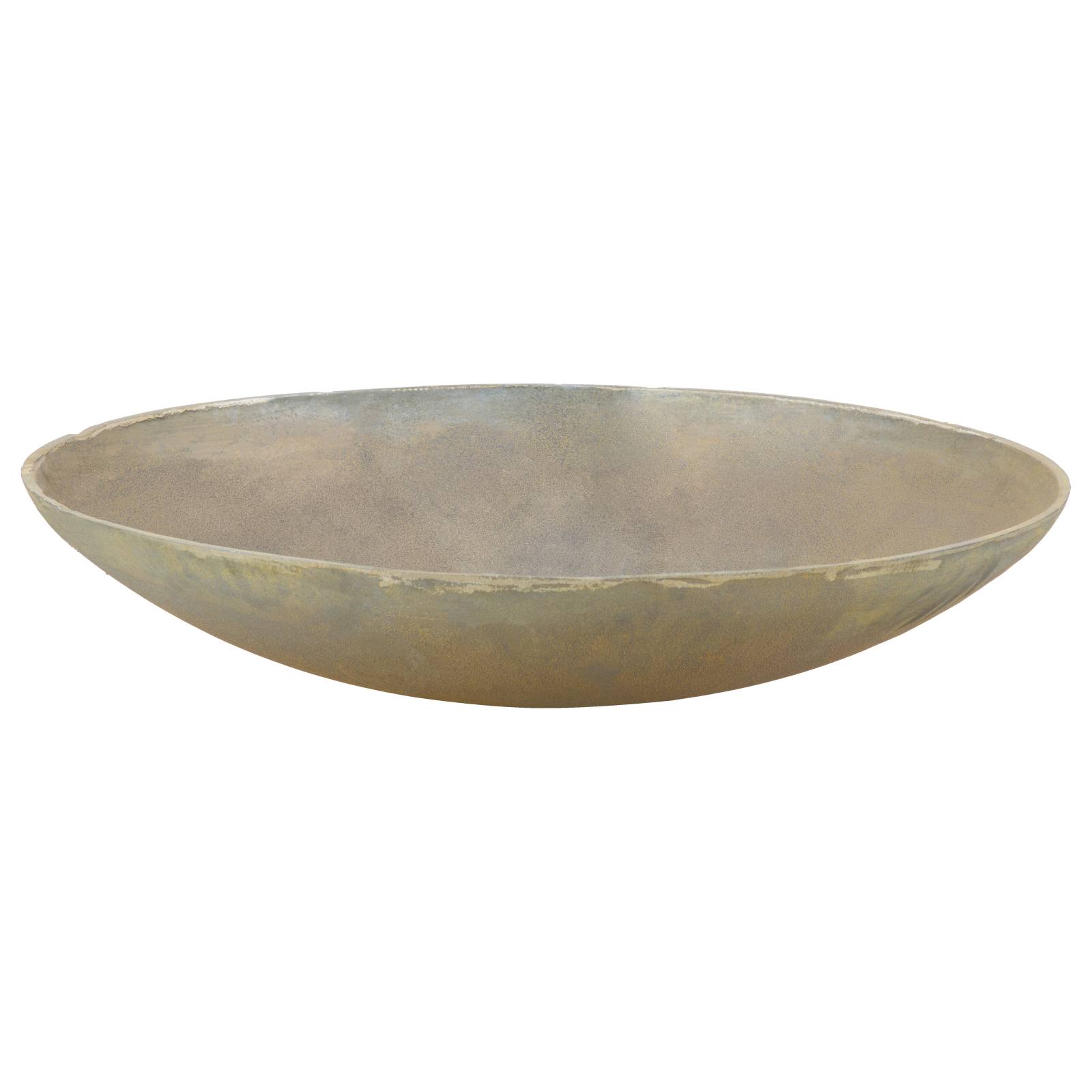
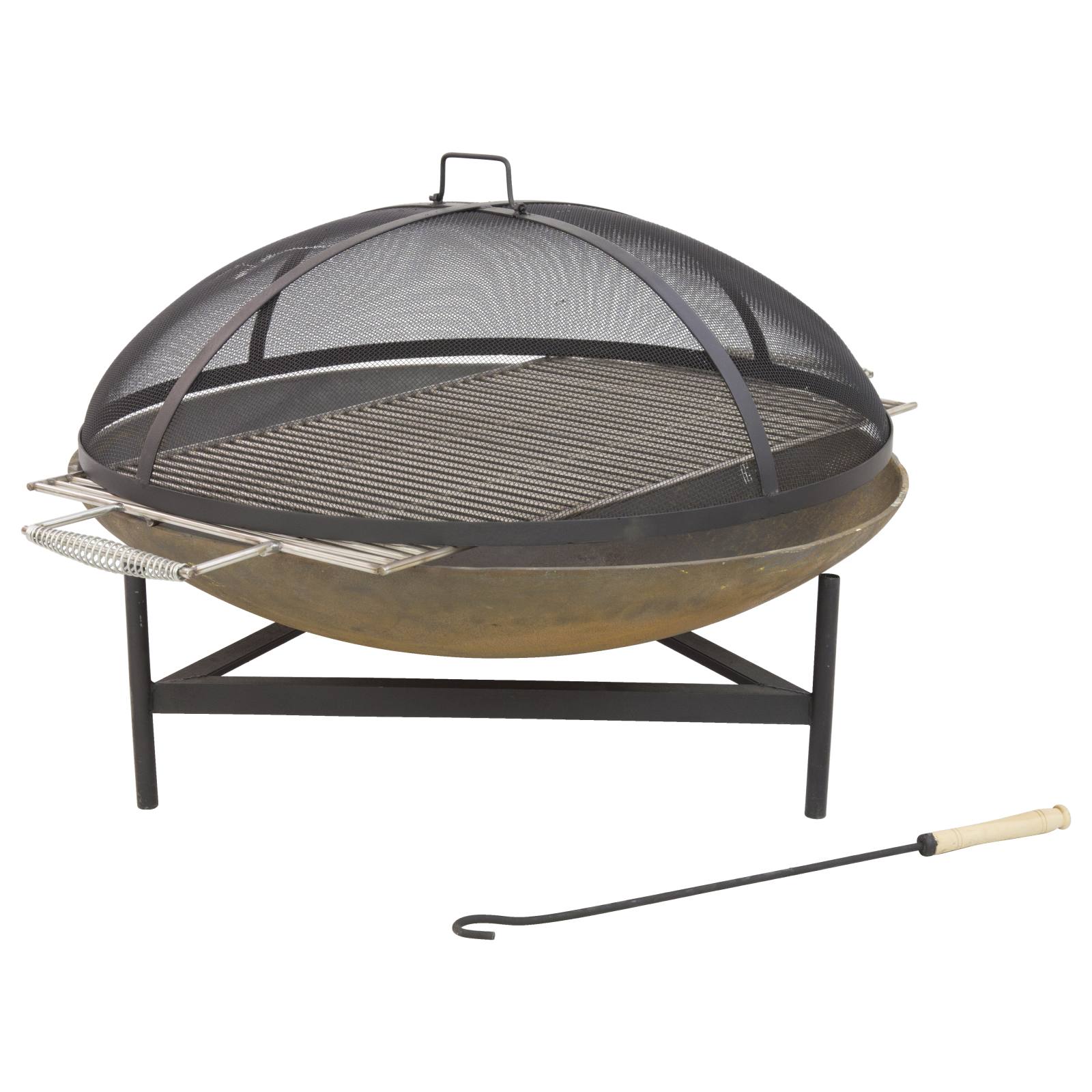
The Spartacus 100cm Cast Iron Fire Pit Bowl and Stand and Large Spartacus Cast Iron Fire Pit Kit from Schots fall into this size. Both stand 100 cm wide x 100 cm deep x 42 cm high on their tripod stand and weigh 50 kg; the Bowl and Stand version is the bowl and stand alone, while the Kit adds a safety screen and a heavy-duty stainless-steel grill.
The 10 mm-thick cast iron bowl sets it apart from thinner-walled competitors in terms of durability.

Large Fire Pit Sizes and Dimensions
Large firepits are the statement piece for a generous outdoor entertaining area. They are suited to properties with plenty of open ground, large rear yards, rural blocks, or purpose-built entertaining decks with non-combustible surfaces and plenty of room.
For Australian homeowners who regularly host larger groups and want an exterior fire feature that commands attention, a 100 cm to 120 cm or larger format works well. Corten steel in particular looks striking at larger sizes and weathers beautifully in most Australian climates.
Be aware that weight goes up significantly at this scale; a well-built corten or cast iron bowl at 100 cm or above can reach 33 kg to 55 kg or more, and placement needs to be considered before delivery.
- Diameter: 100 cm to 120 cm (round), or rectangular formats in the 90 cm to 130 cm range
- Height: Typically 25 cm to 50 cm depending on style and whether legs are included
- Weight: 33 kg to 55 kg for cast iron at 100 cm; heavier corten and custom steel bowls may exceed this
- Seating capacity: 6 to 8+ people
- Minimum space needed: 3 m clearance from all combustible materials; more open space is strongly recommended at this scale
For a larger format option with a contemporary exterior aesthetic, the Lazaro Corten Steel Wood Burner range from Schots offers statement-scale proportions. The Lazaro 54x85cm measures 54 cm deep x 85 cm wide (raised wood-burning format) and the Lazaro 54x105cm extends that to 105 cm wide, both in weathering Corten steel with a rust finish that develops naturally over time.

Firepit Size Comparison at a Glance
Use this table to quickly compare the three size categories side by side before making a purchase decision. All dimensions are typical ranges based on products available in the Australian market.
| Size | Diameter | Height (with legs) | Typical Weight | Seating | Best for |
|---|---|---|---|---|---|
| Small | 60 cm to 80 cm | 25 cm to 45 cm | 15 kg to 35 kg | 2 to 4 people | Compact courtyards, balconies, renters, portable use |
| Medium | 90 cm to 100 cm | 40 cm to 50 cm | 33 kg to 55 kg | 4 to 6 people | Suburban backyards, alfresco areas, family entertaining |
| Large | 100 cm to 120 cm+ | 25 cm to 50 cm | 33 kg to 55 kg+ | 6 to 8+ people | Large rear yards, rural blocks, statement entertaining areas |
Additional Firepit Considerations
1. Safety clearance distances. Most Australian fire authorities require a minimum 3-metre clearance from all combustible materials.
This includes buildings, fences, wooden decks, overhanging tree branches, and garden furniture. On windy days, the effective ember spread zone increases well beyond this distance; always check local fire restrictions and Total Fire Ban status before lighting.
If conditions are windy (above roughly 10 km/h), it is best to hold off entirely.
2. Surface requirements. Firepits must be placed on non-combustible, level surfaces.
Suitable options include concrete, paving, stone, gravel, or compacted earth. Timber decks are not suitable unless a purpose-built non-combustible hearth mat or protective base rated for fire pit use is placed underneath and the deck has sufficient clearance.
Never place a firepit on dry grass, near mulch beds, or over any surface that can catch an ember.
3. Weight and stability. Cast iron firepits at 100 cm can weigh 50 kg or more, so once placed they are not easy to move.
Check that the surface is level and stable to prevent tipping. If the ground is uneven, use paving slabs or a compacted gravel area to create a stable base before positioning the unit.
4. Seating distance. As a general guide, position outdoor seating at least 1.5 m to 2 m from the edge of the firepit bowl. For larger fires or bigger units, moving seating back to 2 m is more comfortable.
This spacing also keeps clothing, cushions, and outdoor furniture a safe distance from radiant heat and ember output.
5. Local council and fire ban rules. Regulations on outdoor fires vary between councils and change seasonally. Some areas require a permit for solid fuel fires; others restrict their use entirely during certain months.
Always check with your local council before use, especially if you live in a bushfire-prone area. Bioethanol or gas fire pits are generally treated differently to open wood-burning fires, but are still subject to local regulations and clearance requirements.
Common Firepit Materials
The material your firepit is made from affects its weight, longevity, how it looks over time, and how much maintenance it needs. Here is how the most common options compare for Australian outdoor conditions.
Cast Iron
Cast iron is the most widely available material for fire pits sold through Australian retailers. It is a heavy, dense material with good heat retention, and at thicknesses around 8 mm to 10 mm it will outlast thinner-gauge steel alternatives by a significant margin.
Cast iron will develop surface rust over time outdoors; this is normal and most cast iron firepits are sold with a rust or weathered finish already applied.
Pros
- Excellent durability at 8 mm to 10 mm wall thicknesses
- Good heat retention; maintains warmth longer after the fire settles
- Widely available through Australian retailers
- Heavy weight provides stability; less likely to be knocked or moved accidentally
Cons
- Heavy at larger sizes (50 kg for a 100 cm bowl); difficult to move once placed
- Thinner-gauge cast iron (under 8 mm) can burn through over time with regular use
- Surface rust is expected outdoors; some maintenance needed to slow heavy rust build-up
Corten Steel (Weathering Steel)
Corten steel, also called weathering steel, is an alloy that forms a self-protecting rust-like patina when exposed to rain and air. Rather than corroding all the way through like mild steel would, the surface oxidisation stabilises over time and acts as a protective layer.
It starts a dark brown-orange and deepens in colour over the first few months and years. It is a popular choice for exterior fire pits in contemporary and industrial-style Australian homes, and for garden settings where a low-maintenance, premium aesthetic is the priority.
Pros
- Self-protecting patina eliminates need for painting or ongoing sealing
- Contemporary, premium aesthetic; deepens and improves in appearance over time
- Generally lighter than cast iron at the same diameter, improving portability
- Well suited to Australian climates including coastal and wet conditions
Cons
- Rust run-off during the initial weathering period can stain paving or concrete below
- Higher purchase price compared to standard painted steel equivalents
- Not ideal for direct contact with soil or standing water without a raised base
Mild Steel / Painted Steel
Many entry-level and mid-range fire pits sold through Australian retailers use mild or powder-coated steel. This is a budget-friendly option and can produce a clean, modern look when new.
The key factor to watch is wall thickness; thinner-gauge steel (below 2 mm to 3 mm) will burn through at the base over time with regular wood fires. When choosing a steel fire pit, look for a wall thickness specification from the manufacturer.
Portable firepits in this category are typically lighter than cast iron or corten equivalents, making them a practical option for moving between areas or for camping-adjacent use.
Pros
- Generally the most affordable option across Australian retailers
- Lighter weight makes these easier to move and store, especially in smaller sizes
- Available in a wide range of styles and finishes
Cons
- Thin-gauge steel (below 3 mm) burns through the base faster with regular wood fires
- Painted or powder-coated finishes can peel or discolour with heat and weathering
- Less suited to permanent outdoor placement without additional weather protection
For most Australian homes doing regular outdoor entertaining, cast iron at a thicker wall gauge or corten steel is worth the investment over a cheap mild steel alternative. The weight difference between cast iron and corten at the same diameter is worth factoring in too: if you want to move the firepit seasonally or store it away, a corten or thicker steel bowl will be easier to manage than a 50 kg cast iron equivalent.
For a permanent exterior position in a well-designed outdoor entertaining area, cast iron's heat retention and solid stability are hard to beat.
Material Comparison for Purchase Decisions
This table covers the factors that matter most when choosing between materials for an Australian outdoor setting.
| Factor | Cast Iron | Corten Steel | Mild / Painted Steel |
|---|---|---|---|
| Typical wall thickness | 8 mm to 10 mm (quality models) | 3 mm (standard) | 1.5 mm to 3 mm |
| Weight at 100 cm | Approx. 50 kg | Lighter; varies by design | Lightest; varies widely |
| Portability | Low; heavy once placed | Medium; manageable at smaller sizes | High; easiest to move and store |
| Durability | Excellent at 8 mm+ | Very good; self-protecting patina | Moderate; thinner gauges burn through faster |
| Maintenance | Low; surface rust is normal | Very low; patina is self-sealing | Medium; coatings can peel with heat |
| Weather resistance | Good; suits all Australian climates | Excellent; designed for outdoor exposure | Fair; better with covered storage |
| Aesthetic | Rustic, traditional, industrial | Contemporary, premium, architectural | Modern or neutral; wide range of finishes |
| Price range (approx.) | $370 to $850+ | $600 to $3,300+ | $100 to $500 |
| Best for | Permanent placement, regular use, family backyards | Design-led homes, low-maintenance exterior settings | Budget buyers, portable or occasional use |
Top 5 Tips for How to Choose the Right Firepits Size and Style
Getting the sizing and placement right from the start saves a lot of reworking later. Here are the most practical things to check before you buy.
1. Measure your outdoor space first, not after.
Mark out the firepit's footprint on your paving or lawn using string or chalk and then walk around it. You need at least 3 m of clear space to all combustible surfaces in every direction.
This is the minimum clearance required by most Australian fire authorities. If you cannot achieve this clearance in your space, a wood-burning firepit may not be suitable and a gas or bioethanol option (with its own clearance requirements) should be considered instead.
2. Match the bowl size to your seating group, not just your yard.
A 78 cm to 80 cm bowl suits 2 to 4 people well and works for a modest entertaining zone. A 90 cm to 100 cm bowl is better for 4 to 6 people and gives a bigger fire with more heat output.
For larger groups of 6 or more, a 100 cm or wider format makes sense. Position seating 1.5 m to 2 m from the edge of the bowl for comfort and safety.
3. Consider weight before you commit to a location.
A cast iron firepit at 100 cm can weigh 50 kg or more. Once you have placed it on its surface and lit a few fires, it will not be easy to shift.
4. Think about the surface material underneath, not just around it.
A firepit placed on an existing timber deck without a rated non-combustible mat is a fire hazard and may not be covered by home insurance in the event of an incident. Paving, concrete, stone, or compacted gravel are the preferred surfaces.
If you are building a new entertaining area specifically to include a firepit, plan the surface material at the design stage.
5. Check your council regulations and fire ban rules before the first use.
Restrictions on open outdoor fires vary significantly across Australian councils and states, and can change seasonally. Some councils prohibit solid fuel fires within certain boundary distances or entirely during summer months.
Fire ban days (including Total Fire Bans) prohibit all solid fuel outdoor fires regardless of council zone. Sign up for fire weather alerts in your area and always check the status before lighting. Gas and bioethanol firepits are typically less restricted but still subject to local rules.
Best Firepits from Schots
 Atlas 78cm Cast Iron Fire Pit, Rust
$629.00
- Compact 78 cm diameter x 78 cm deep x 25 cm high; well suited to smaller courtyards, compact gardens, and intimate entertaining setups for 2 to 4 people
- Sturdy cast iron construction with a rust finish; durable and long-lasting for regular outdoor use in Australian conditions
- Safety screen included, providing ember containment during use for added peace of mind in family settings
- Weight: 33.5 kg; heavier than thin steel alternatives but manageable enough to reposition on a flat surface if needed; no assembly required
 Spartacus 100cm Cast Iron Fire Pit Bowl and Stand, Rust Finish
$549.00
- 100 cm wide x 100 cm deep x 42 cm high on its tripod stand; a generous, versatile format suited to medium to large outdoor entertaining areas and groups of 4 to 6 people
- 10 mm thick cast iron bowl construction; significantly thicker than most competitors, meaning longer service life before any base degradation from heat
- Rust finish provides a natural, rustic exterior aesthetic that suits coastal, country, and contemporary Australian garden styles
- Weight: 50 kg; supplied with the bowl and tripod stand, no safety screen or grill; add the screen and grill separately or step up to the Kit below if you want them included
 Large Spartacus Cast Iron Fire Pit Kit, Rust Finish
$899.00
- 100 cm wide x 100 cm deep x 42 cm high on its tripod stand; bringing the fire to a comfortable seated height for evening entertaining
- Includes a safety screen and heavy-duty stainless-steel grill, making it functional as both a heating fire and a casual cooking setup over coals
- 10 mm thick cast iron bowl; built to outlast thinner steel alternatives and designed for regular Australian backyard use across cooler months
- Weight: 50 kg; solid and stable at ground level; no assembly required; rust finish suits both rustic and industrial exterior design styles
 Lazaro 54x105cm Corten Steel Wood Burner, Rust
$3,499.00
- 105 cm wide x 54 cm deep wood-burning format in genuine Corten weathering steel; a premium, statement exterior fire feature suited to large entertaining areas and design-led Australian homes
- Self-protecting rust patina develops naturally over time outdoors; no painting or sealing required, making it a genuinely low-maintenance exterior firepit for the long term
- The raised format brings the fire to a comfortable functional height; works as both a warming fire and a cooking surface in an outdoor entertaining setup
- Also available in the 54x85cm format for slightly more compact spaces; both models suit contemporary, coastal, and industrial exterior design directions popular in 2026 Australian homes
Frequently Asked Questions About Firepits
Can you put a fire pit on a wood deck?
Placing a wood-burning firepit directly onto a timber deck is not recommended by Australian fire authorities; the combination of radiant heat and embers presents a genuine ignition risk. If you want a firepit on a deck, a gas or bioethanol model on a rated non-combustible heat mat is a safer option, and you should always check with your local council and the manufacturer's specifications before proceeding.
How do you start a fire in a fire pit?
Place a base of dry kindling in the centre of the bowl, stack dry seasoned timber loosely around it in a teepee or log cabin shape to allow airflow, then light at the base with a long-reach match and let the small flames establish before adding larger logs.
Only use dry seasoned hardwood or approved fuels; never use accelerants such as petrol or lighter fluid, and avoid treated timber as both produce dangerous flare-ups and toxic emissions.
Can I have a fire pit in my backyard?
In most parts of Australia, yes, provided the firepit is above ground, contained, positioned at least 3 metres from all combustible materials, and only burning approved fuels such as dry seasoned hardwood, LPG, or natural gas.
Regulations vary by state and council and can change seasonally, so always check your local council rules and the current Total Fire Ban status before lighting.
Can I have a fire pit in my backyard in Perth?
Solid-fuel firepits are permitted in Perth for recreational heating and cooking, but cannot be used on any day when the Bureau of Meteorology has issued a fire danger forecast of High, Extreme, or Catastrophic, or when a Total Fire Ban has been declared.
The fire must not create a smoke nuisance for neighbours, and each local council in the Perth metro area may have additional rules on top of the state requirements, so checking the DFES website and your council before use is the safest approach.
How do you put out a fire in a fire pit?
Stop adding wood well before you plan to finish, let the fire burn down to coals, then pour water slowly over the entire bowl while stirring the ash with a metal poker until there is no heat, steam, or hissing.
Never leave a firepit unattended until fully cold, avoid using sand as it traps heat beneath the surface, and always keep a bucket of water or garden hose on hand during use.
Getting the right firepit for your outdoor space comes down to matching the size to your entertaining needs, checking your clearances carefully, and choosing a material that will hold up to regular Australian outdoor use. Browse the full Schots firepits collection for the current range, or explore the broader outdoor heating range including chimineas and corten steel wood burners to find the right fit for your home and entertaining style.
Related Fireplace and Outdoor Heating Guides
- Standard Fireplace Sizes and Dimensions Guide 2026 for a broader look at sizing across all fireplace types.
- Built-In vs Freestanding Electric Fireplace Guide 2026 if you are weighing up an indoor fireplace alongside your outdoor firepit.
- Wood Burner vs Electric Fireplace Guide 2026 for a comparison of fuel types across indoor heating options.
- Gas vs Electric Fireplaces Guide for a comparison of the two most popular flue-free indoor options.
- Fireplace Cost Guide for average price and installation cost ranges across all fireplace and outdoor heating types.


